


How Web IP Per Tab Works on Browser
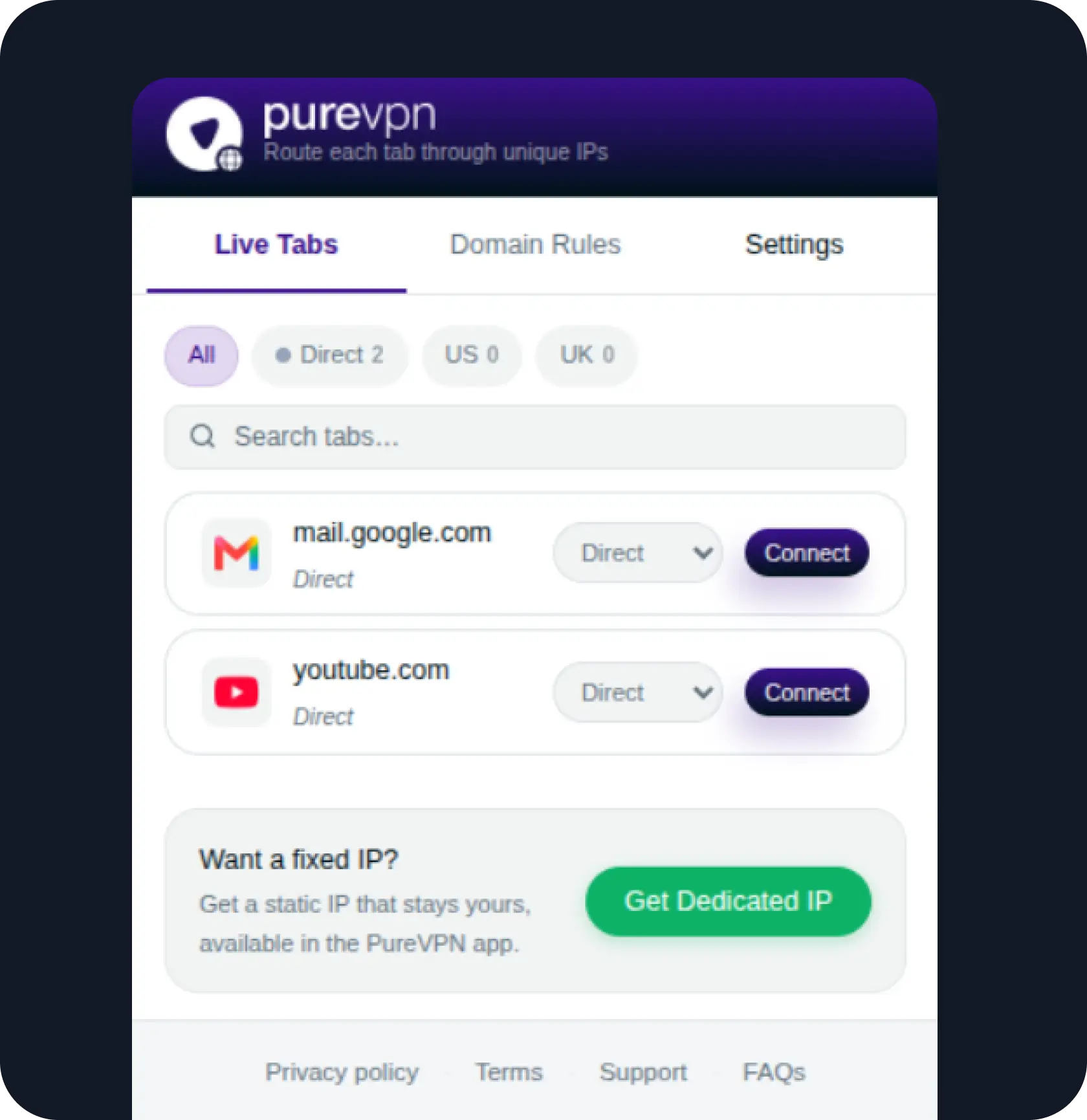
IP Per Tab moves proxy control from the whole browser to the individual tab:
Open your tabs
Keep your scrapes, rank checks, ad previews, QA tests, or repeat domains open in regular Chrome.

Set the IP for each tab
Choose the residential proxy route you want each tab to use from the extension popup.
Work without switching
Each tab keeps its own IP session, so you can continue side by side in the same browser.
What’s Included in IP Per Tab
Per-Tab IP Assignment
Assign a residential proxy IP to individual Chrome tabs instead of changing the proxy setting for the whole browser.
Session Isolation
Keep tabs running simultaneously with separate IP sessions, so one workflow does not interrupt or reset the others.
Domain Rules
Save proxy routes for specific domains, so the right route applies automatically when you return to the same site.
Why Use a Different IP for Each Browser Tab?
Different tabs can have different jobs, and sometimes they need different IPs too. Here is what that looks like for different users:
Take Control of Your IP, Tab by Tab
Skip manual proxy setup. Route selected Chrome tabs through clean residential IPs with built-in- per-tab IP routing, while the rest of your traffic stays on your original connection.

Why Most Browser Proxy Tools Fall Short
Browser proxy tools can change your IP, but managing multiple IPs and sessions is not always straightforward. This is because:
One proxy change affects every tab
Browser-wide proxy tools use the same route across your tabs. Switch to another IP for one task, and the other tabs move with it.
Different IPs mean more browser profiles
Profile-based tools keep sessions separate, but each one comes with another profile to manage. The more IPs you need, the more cluttered the workflow gets.
Parallel tasks are harder to keep separate
When several tasks need different IPs at the same time, you are left switching routes or moving between profiles and windows to keep each session separate.
The overhead grows with every new session
More sessions mean more profiles, windows, and proxy routes to keep track of. A simple IP change becomes harder to manage as the workflow grows.